
To Be or Not to Be: Mainframe Modernization Dilemma, Challenges, Strategies, and Mainframe Modernization Tools
Summary: Mainframes continue to run critical systems across banking, healthcare, insurance, and government sectors. At the same time, enterprises need faster development, better integration capabilities, and more flexible infrastructure. Modernization has become a way to extend the value of legacy environments while adapting them to current business and technology demands.



For many enterprises, mainframes continue to play a critical role in daily operations. Financial institutions, healthcare providers, insurers, retailers, and government organizations rely on them to process massive volumes of transactions and store sensitive business data, sometimes using mainframe modernization tools to support these operations.
Mainframes are valued for their stability, resiliency, security, and high performance.
Despite the rapid growth of cloud technologies, the mainframe itself is far from obsolete. IBM continues to release new generations of mainframes every few years, adding modern capabilities such as AI acceleration, advanced encryption, improved sustainability, and stronger security features. For example, the latest IBM zSystems platforms are designed to support hybrid cloud environments and modern enterprise workloads.
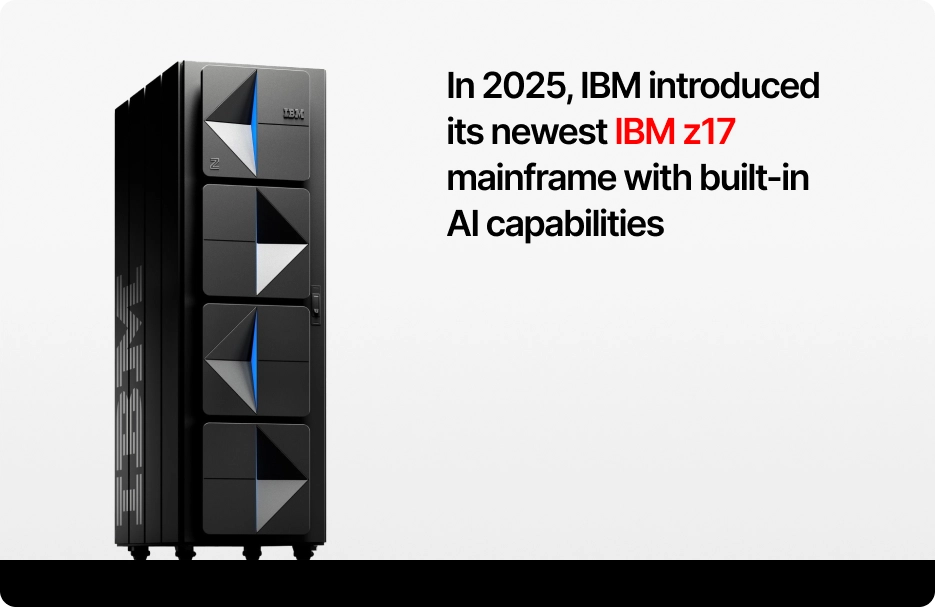
Because of this, the discussion around modernization is usually not about replacing the hardware itself, but rather about how organizations manage and evolve the applications running on these systems.
Today, companies are facing an increasingly complex IT landscape. They need to integrate legacy systems with cloud platforms, support digital services, improve development speed, and respond faster to changing business requirements. At the same time, many mission-critical applications running on mainframes are deeply connected to core business processes and cannot simply be rewritten overnight.
This is where mainframe modernization comes into play.
Mainframe modernization is the process of updating applications, databases, workflows, and integrations connected to mainframe environments in order to improve flexibility, interoperability, and operational efficiency. Depending on business goals, modernization may involve:
- Integrating legacy systems with modern platforms
- Migrating selected workloads to the cloud
- Transforming legacy code into modern languages
- Improving API connectivity
- Automating development and deployment processes
- Or optimizing existing mainframe environments
Importantly, modernization does not always mean moving everything away from the mainframe. In many cases, organizations adopt a hybrid approach, where some workloads remain on the mainframe while others are moved to public or private cloud infrastructure.
According to the Accenture Global Mainframe Modernization Survey, 93% of companies using mainframes are already migrating or considering moving some applications to the cloud. However, many organizations also recognize that not all workloads are suitable for immediate migration due to concerns around complexity, security, compliance, and application dependencies.
As a result, modernization strategies today are becoming more balanced and pragmatic. Instead of treating modernization as a complete replacement initiative, companies increasingly focus on finding the right combination of:
- Mainframe capabilities
- Cloud technologies
- Modern development practices
- And long-term business requirements
Mainframe modernization benefits
Mainframe modernization can deliver significant business and operational advantages when aligned with the company’s long-term IT strategy. While the exact outcomes depend on the chosen modernization approach, organizations typically pursue modernization initiatives to improve flexibility, reduce operational complexity, and better integrate legacy systems with modern digital environments.
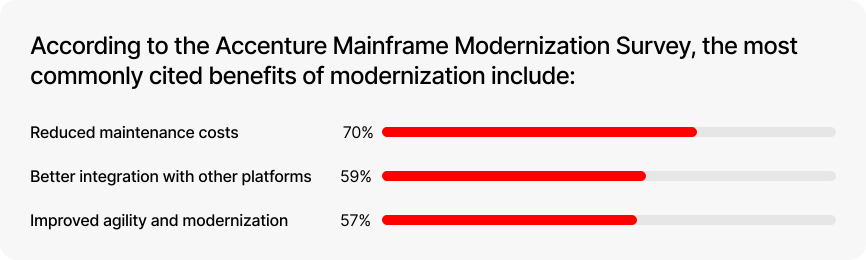
These benefits explain why many enterprises are gradually modernizing at least part of their mainframe environments, especially as hybrid cloud architectures become more common.
Lower infrastructure and maintenance costs
One of the main drivers behind modernization is the growing cost of maintaining legacy environments. Traditional mainframe ecosystems often require expensive infrastructure, specialized licensing models, and highly experienced personnel capable of supporting older technologies.
Modernization can help organizations optimize operational expenses by:
- Reducing dependency on aging infrastructure
- Automating administrative processes
- Simplifying application maintenance
- And improving resource utilization
For some companies, even partial modernization can significantly reduce the cost of supporting legacy systems over time.
Better integration with modern platforms
Modern businesses rely on a wide ecosystem of technologies, including cloud services, APIs, analytics platforms, AI tools, and customer-facing digital applications. Legacy environments were not originally designed for this level of connectivity.
Modernization helps bridge this gap by enabling smoother integration between mainframe applications and modern systems. This allows organizations to build more flexible hybrid environments without fully abandoning existing infrastructure.
As a result, enterprises can continue leveraging the reliability of the mainframe while improving interoperability across their broader technology stack.
Increased business agility
Legacy systems are often associated with long development cycles and limited flexibility. Modernization initiatives frequently introduce DevOps practices, CI/CD pipelines, API-driven architectures, and modern development frameworks that accelerate software delivery and simplify future updates.
This enables organizations to respond more quickly to changing market demands, customer expectations, and regulatory requirements.
Importantly, improved agility does not necessarily require a complete migration away from the mainframe. Many organizations achieve faster innovation cycles by modernizing surrounding applications and workflows while retaining core transactional systems on the mainframe.
Improved scalability and performance flexibility
Modernized environments provide greater flexibility in workload management and resource allocation. Hybrid architectures allow organizations to distribute workloads between mainframes, cloud platforms, and distributed systems depending on operational needs.
This approach helps companies optimize performance while maintaining the stability required for mission-critical applications.
Enhanced security and compliance capabilities
Security remains one of the strongest advantages of the mainframe platform itself. However, modernization can further strengthen enterprise security posture by introducing:
- Advanced monitoring tools
- Automated threat detection
- Modern encryption standards
- Centralized identity management
- And improved compliance reporting
For highly regulated industries such as banking, healthcare, and insurance, these improvements are especially important when integrating legacy environments with modern digital services.
Access to modern development ecosystems
Another important benefit of modernization is access to a broader developer ecosystem. Many organizations face challenges related to the shrinking pool of specialists experienced in legacy programming languages and technologies.
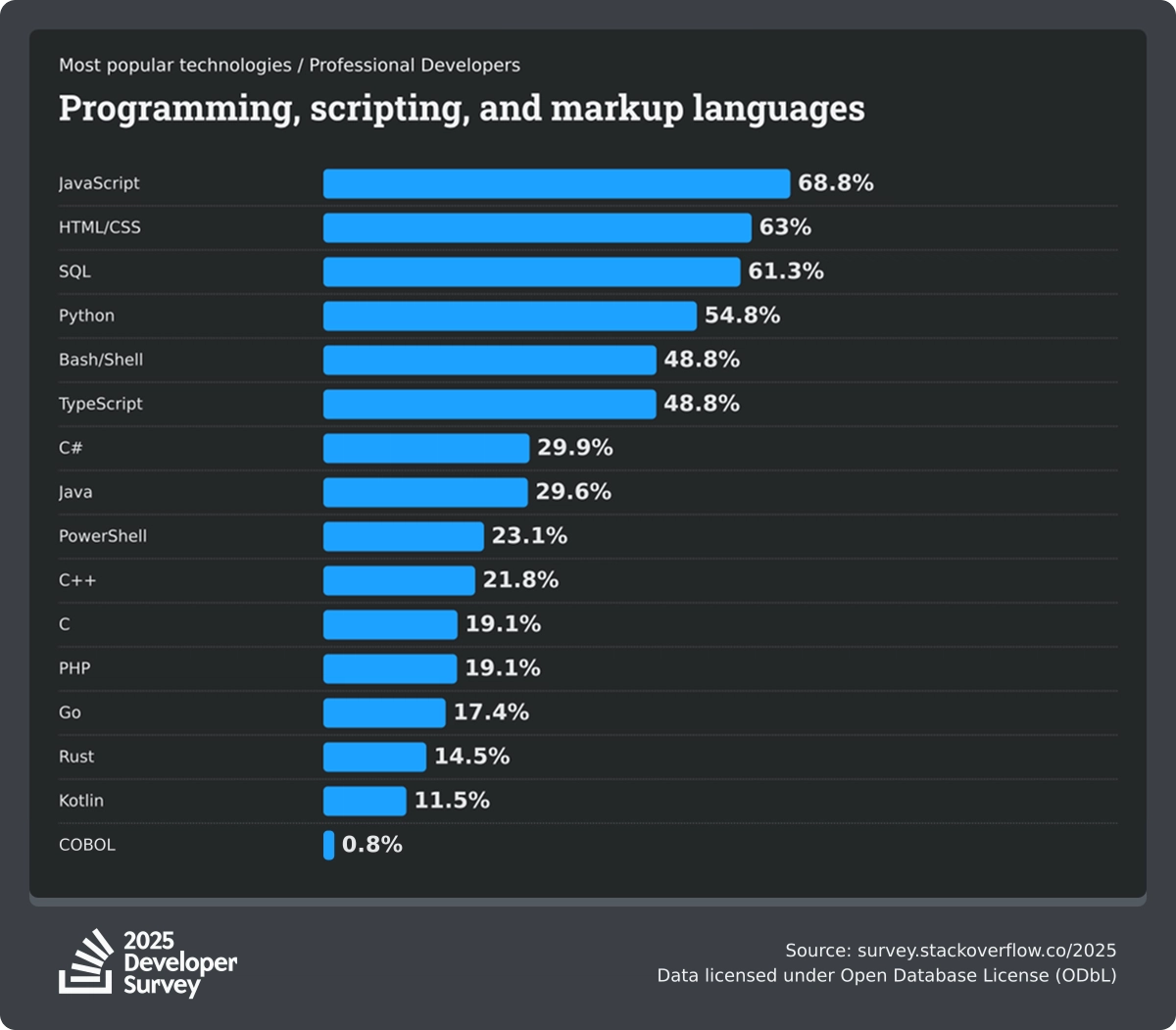
By modernizing applications or introducing modern integration layers, companies can make their environments more accessible to developers familiar with technologies such as Java, .NET, Python, cloud-native architectures, and API-based development.
This helps organizations simplify hiring, accelerate onboarding, and support long-term technology sustainability.
Mainframe modernization challenges
Although mainframe modernization can provide substantial benefits, these initiatives are often complex, resource-intensive, and closely tied to critical business operations. Legacy systems usually support core enterprise processes, meaning even minor changes can affect transaction processing, customer experience, or regulatory compliance.
For this reason, modernization projects require careful planning, phased execution, and strong governance.
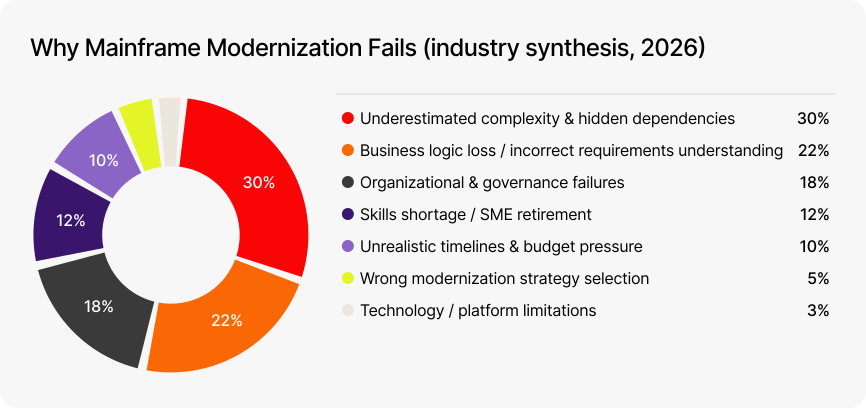
Complexity of legacy environments
One of the biggest challenges is the complexity of legacy systems themselves. Most enterprise mainframe environments have evolved over decades and rarely remain unchanged for long periods of time. Organizations continuously expand them with integrations, custom workflows, temporary fixes, and additional services.
As a result, many companies operate environments where legacy and modern technologies coexist in highly interconnected architectures. Over time, this creates:
- Undocumented dependencies
- Tightly coupled applications
- Duplicated functionality
- And deeply embedded business logic
Because of this, modernization is rarely a simple migration process. Even small infrastructure or code changes can impact multiple systems simultaneously.
The challenge becomes even greater when organizations no longer have complete technical documentation or access to engineers who originally designed the environment.
Skills gap and workforce challenges
The shortage of experienced specialists remains one of the most significant modernization barriers.
Many legacy systems still rely on technologies such as COBOL, PL/I, JCL, and Db2 for z/OS, while the number of professionals with deep expertise in these areas continues to decline. At the same time, modernization initiatives also require knowledge of:
- Cloud platforms
- Cybersecurity
- DevOps practices
- APIs and integrations
- Automation tools
- And modern programming languages
This creates a difficult situation where organizations must maintain legacy environments while simultaneously building expertise in modern technologies.
Companies often need to:
- Retrain internal teams
- Hire highly specialized engineers
- Involve external consultants
- And preserve institutional knowledge before experienced employees retire
As modernization projects become more hybrid and cloud-oriented, the demand for multi-skilled teams continues to grow.
Business continuity risks
Mainframes typically support mission-critical workloads, especially in industries such as banking, insurance, healthcare, and government services. Because of this, even limited downtime may lead to financial losses, operational disruption, or reputational damage.
This makes business continuity one of the central concerns during modernization initiatives.
Organizations must carefully manage:
- Migration timelines
- Testing procedures
- Rollback strategies
- And deployment sequencing
In many cases, companies prefer gradual modernization approaches that reduce operational risks and allow legacy and modern environments to coexist during the transition period.
Security and compliance concerns
Security and compliance requirements also play a major role in modernization planning.
Organizations handling sensitive financial, healthcare, or government data must ensure that modernization initiatives do not weaken existing security controls or violate regulatory standards.
During migration and integration processes, companies may face increased exposure to:
- Data breaches
- Configuration vulnerabilities
- Inconsistent access policies
- And security gaps across hybrid environments
This is one of the reasons why some organizations decide to keep certain workloads on the mainframe even while modernizing surrounding applications and infrastructure.
Today, modernization strategies increasingly include:
- Advanced encryption
- Centralized identity management
- Automated monitoring
- And compliance-focused governance frameworks
For highly regulated industries, security is often a deciding factor in modernization architecture decisions.
Balancing innovation with existing business logic
Another major challenge is preserving the business logic accumulated over decades.
Many legacy applications contain highly customized transaction flows, operational rules, and industry-specific processes that are deeply integrated into daily business operations. Replacing or rewriting them too aggressively can introduce serious operational risks.
Because of this, organizations must balance two priorities simultaneously:
- Driving innovation and modernization
- While protecting business-critical functionality and operational stability.
In practice, the most effective modernization strategies are often incremental rather than disruptive. Instead of replacing everything at once, companies gradually evolve their environments while preserving the systems that continue to deliver business value.
Mainframe modernization strategies
There is no universal approach to mainframe modernization. Every organization has its own combination of legacy technologies, business priorities, compliance requirements, operational risks, and budget limitations. Because of this, companies usually choose modernization strategies based on what they are trying to achieve rather than following a single migration model.
Some organizations aim to reduce infrastructure costs, others focus on improving integration with cloud platforms, while some prioritize faster software delivery or better scalability. In many cases, enterprises combine several modernization approaches simultaneously.
Today, the most common strategies include replatforming, rebuilding applications from scratch, code transformation, and rehosting.
Replatforming
Replatforming involves moving existing mainframe applications to modern infrastructure while preserving most of the original business logic and application architecture.
This strategy is often considered one of the more practical modernization approaches because it allows organizations to improve flexibility without completely rebuilding their systems. Applications written in legacy languages such as COBOL can often continue operating on modern Linux or Windows environments with relatively limited code changes.
In some cases, companies move workloads to cloud-compatible environments while maintaining the existing application structure. This helps reduce dependency on expensive hardware and allows organizations to integrate legacy applications more easily with modern systems and development pipelines.
One of the main advantages of replatforming is that it enables enterprises to modernize gradually while minimizing disruption to business operations.
At the same time, replatforming does not fully eliminate legacy architecture limitations. Organizations may still need additional modernization work later to improve scalability, application agility, or developer productivity.
Clean slate (application rebuild)
The “clean slate” approach focuses on completely rebuilding legacy applications using modern architectures, frameworks, and programming languages.
At first glance, this strategy may appear attractive because it gives organizations an opportunity to redesign systems around current business requirements rather than adapting older technologies. Companies can create cloud-native applications, modernize user experiences, improve scalability, and simplify long-term maintenance.
However, rebuilding enterprise applications from scratch is often significantly more difficult than expected.
Many mainframe applications contain decades of accumulated business logic, customer-specific workflows, operational exceptions, and regulatory rules that are not always fully documented. Recreating all of these processes inside a new system can become extremely time-consuming and expensive.
Because of this, full rebuild strategies are usually chosen when organizations need major architectural transformation rather than incremental modernization.
Code transformation
Code transformation focuses on converting legacy applications into modern programming languages while preserving existing business functionality.
Originally, many code transformation tools worked as relatively simple syntactic converters. Modern platforms, however, use semantic analysis, abstract syntax trees, and automated refactoring technologies to modernize applications much more effectively.
For example, organizations may transform COBOL applications into Java or C# environments to make systems easier to maintain and more accessible to modern development teams.
This strategy helps companies:
- Preserve proven business logic
- Reduce dependence on legacy skillsets
- Improve integration capabilities
- And align applications with modern development ecosystems
At the same time, code transformation is not always a “one-click” solution. Organizations still need to validate converted code, optimize performance, adjust application architecture, and prepare teams for long-term maintenance of the transformed environment.
Successful transformation projects usually combine automation with strong engineering oversight and business validation processes.
Rehosting
Rehosting, often referred to as mainframe-as-a-service, involves moving workloads to external providers that manage the underlying mainframe infrastructure on behalf of the organization.
This strategy allows companies to continue using existing applications while reducing the operational burden associated with maintaining on-premises mainframe hardware.
Rehosting has become increasingly popular among organizations looking for:
- More flexible financial models
- Reduced infrastructure management responsibilities
- And improved operational scalability
In many cases, providers offer consumption-based pricing models that help companies better align infrastructure costs with actual usage.
However, rehosting does not necessarily solve all modernization challenges. While infrastructure management becomes easier, organizations may still face limitations related to legacy application architectures, developer skill shortages, and long-term agility.
For this reason, rehosting is often used as part of a broader hybrid modernization strategy rather than a complete long-term solution on its own.
Choosing the right modernization strategy
In practice, most enterprises do not rely on a single modernization strategy.
Instead, organizations typically adopt a hybrid modernization model, where different applications and workloads follow different paths depending on their business value, technical complexity, and operational requirements.
For example:
- Critical transactional systems may remain on the mainframe
- Customer-facing services may move to cloud-native platforms
- While older applications may undergo gradual code transformation
The most effective modernization strategies are usually those that balance:
- Business continuity
- Operational risk
- Long-term scalability
- And modernization goals.
Rather than treating modernization as a one-time migration project, many organizations now approach it as an ongoing evolution of their IT ecosystem.
Mainframe modernization tools
Modernizing mainframe environments is rarely possible without specialized tools and platforms. Enterprise systems often include millions of lines of legacy code, highly customized business logic, complex database structures, and deeply interconnected applications. Manual modernization in such environments is usually too slow, expensive, and risky.
This is why organizations increasingly rely on dedicated modernization platforms that help automate migration, simplify integration, reduce operational risks, and accelerate transformation projects.
Today, the market includes a wide range of modernization solutions — from automated code conversion platforms to cloud-native migration frameworks and AI-powered development tools.
Ispirer
Ispirer focuses on automated database migration, application conversion, and legacy system modernization. The company provides tools and services designed to simplify complex migration projects involving outdated databases, legacy programming languages, and mainframe environments.
Two of the company’s core solutions are Ispirer SQLWays and Ispirer CodeWays.
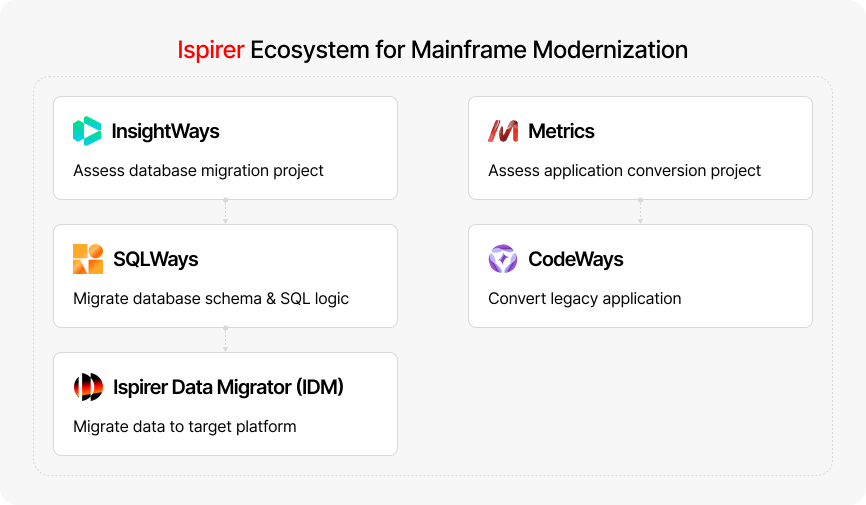
Ispirer SQLWays
SQLWays is designed for automated database migration and schema conversion. The platform supports migration between numerous database systems, including legacy enterprise databases and modern cloud-ready environments.
The solution helps organizations automate:
- Schema conversion
- SQL code migration
- Stored procedure transformation
- Data type mapping
- And database compatibility adjustments
One of the key advantages of SQLWays is its ability to significantly reduce manual migration effort during large-scale modernization initiatives. Instead of rewriting database logic manually, organizations can automate a substantial portion of the conversion process while maintaining existing business functionality.
This becomes especially important in projects involving legacy mainframe databases such as Db2 for z/OS.
Ispirer CodeWays
CodeWays focuses on application and code modernization. The platform supports automated conversion of legacy programming languages into modern development environments.
For organizations operating COBOL-based applications, CodeWays can help modernize legacy codebases and transform them into more maintainable architectures compatible with current development ecosystems.
The platform is designed to support:
- Code analysis
- Automated transformation
- Application refactoring
- Dependency mapping
- And modernization planning
By automating repetitive migration tasks, CodeWays helps organizations reduce project timelines and minimize migration risks while preserving critical business logic.
Ispirer mainframe modernization case study
One example of large-scale modernization involved a global HR software provider headquartered in Denmark. As part of a broader cloud transition initiative, the company decided to move away from its OS/390 mainframe environment and modernize its database infrastructure.
The organization needed to migrate approximately 400,000 lines of Db2 OS/390 SQL code to Microsoft SQL Server 2019 within a very limited timeframe.
After evaluating multiple migration providers, the company selected Ispirer Migration Service because of its automation capabilities and experience with enterprise-scale database modernization.
The project included several technically challenging tasks. During the migration, Ispirer engineers automated:
- TIMESTAMP to DATETIME2 conversions
- Transaction management replacements
- Schema handling logic
- Decimal formatting transformations
- And complex date comparison logic
The migration project was completed in just three months, allowing the customer to continue its broader AWS cloud transition initiative without major delays.
Following modernization, the company achieved:
- Improved scalability
- Reduced operational costs
- Stronger security capabilities
- easier integration with modern systems
- and access to advanced SQL Server functionality, including compression and encryption features
“The project demonstrates how automation can significantly accelerate modernization timelines while reducing the risks associated with manual migration processes.”
IBM mainframe application modernization ecosystem
IBM remains one of the most influential vendors in the mainframe modernization market. Rather than positioning modernization as a full replacement strategy, IBM focuses heavily on hybrid environments where mainframes continue operating alongside cloud platforms and modern applications.
IBM’s modernization ecosystem includes several specialized solutions designed to improve integration, automation, AI adoption, and application delivery.
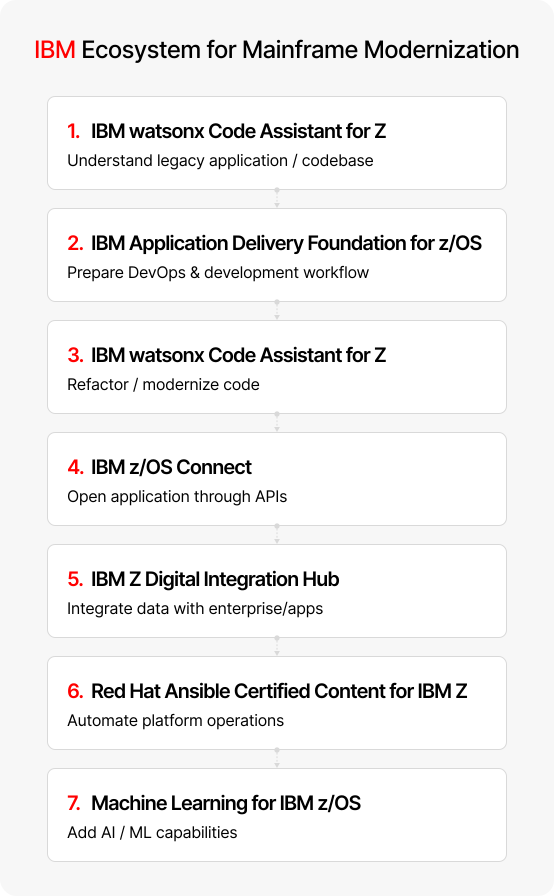
IBM watsonx Code Assistant for Z
IBM watsonx Code Assistant for Z is an AI-powered modernization solution designed to help organizations transform legacy applications more efficiently.
The platform uses generative AI capabilities to assist developers with:
- Сode analysis
- Documentation
- Сode explanation
- And application transformation tasks
One of its primary use cases is helping enterprises modernize COBOL applications and simplify migration planning for large legacy environments.
IBM z/OS Connect
IBM z/OS Connect focuses on API enablement for mainframe applications.
The solution allows organizations to expose existing mainframe services as REST APIs, making it easier to integrate legacy applications with cloud services, mobile applications, and modern enterprise systems.
This approach helps companies extend the value of existing systems without fully rewriting core applications.
IBM Z Digital Integration Hub
IBM Z Digital Integration Hub is designed to improve real-time data access across enterprise environments.
The platform helps organizations reduce direct нагрузку on transactional mainframe systems by creating high-speed access layers for modern digital applications and analytics platforms.
This becomes especially important for enterprises processing large transaction volumes while supporting modern customer-facing services simultaneously.
IBM Application Delivery Foundation for z/OS
IBM Application Delivery Foundation for z/OS provides development and DevOps tooling for enterprise application modernization.
The platform supports modern software delivery practices within mainframe environments, including:
- CI/CD pipelines
- Automated testing
- Code quality management
- And collaborative development workflows
Its primary goal is to help organizations modernize development processes without abandoning critical mainframe applications.
Machine Learning for IBM z/OS
Machine Learning for IBM z/OS enables organizations to run machine learning workloads directly within mainframe environments.
This allows enterprises to use AI-driven analytics and automation while keeping sensitive operational data inside secure mainframe infrastructure.
The platform is often used for:
- Fraud detection
- Anomaly detection
- Predictive analytics
- And operational optimization
Red Hat Ansible Certified Content for IBM Z
Red Hat Ansible Certified Content for IBM Z helps automate infrastructure management and operational workflows across hybrid environments.
The solution enables organizations to standardize automation processes between cloud platforms, distributed systems, and IBM Z infrastructure using Ansible-based automation frameworks.
This supports more consistent operations and simplifies large-scale infrastructure management.
Google Cloud mainframe modernization ecosystem
Google Cloud approaches modernization primarily through cloud migration, code transformation, and hybrid interoperability.
Its modernization portfolio is designed to help enterprises gradually migrate workloads from legacy systems into cloud-native architectures while reducing operational disruption.
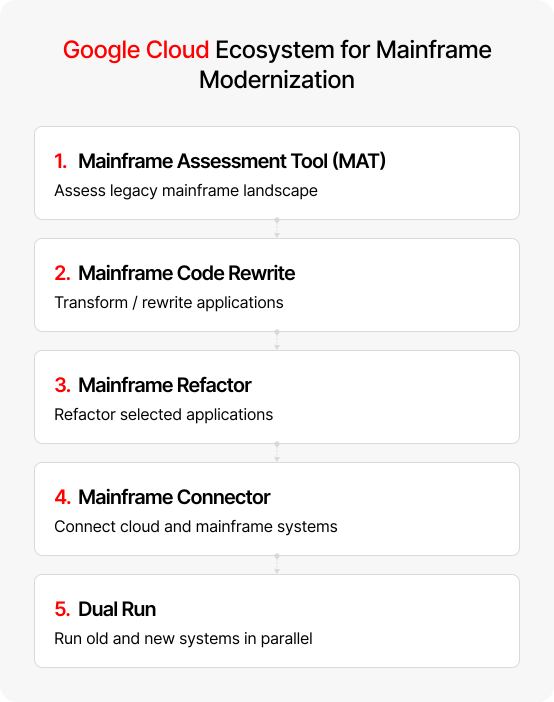
Mainframe Assessment Tool (MAT)
Google Cloud’s Mainframe Assessment Tool helps organizations analyze existing mainframe environments before modernization begins.
The platform evaluates:
- Application dependencies
- Infrastructure complexity
- Migration readiness
- And potential modernization paths
This assessment phase is critical for reducing migration risks and identifying the most suitable modernization strategy.
Mainframe Code Rewrite
Mainframe Code Rewrite is designed to automate the transformation of legacy applications into modern cloud-compatible codebases.
The platform focuses heavily on COBOL modernization and supports migration toward Java-based environments running on Google Cloud infrastructure.
By automating parts of the transformation process, organizations can accelerate modernization while reducing manual engineering effort.
Dual Run
Dual Run helps organizations operate legacy and modernized environments simultaneously during migration projects.
This approach allows enterprises to validate workloads, compare outputs, and reduce operational risk before fully switching production systems to modern platforms.
For mission-critical systems, parallel execution models are often essential for maintaining business continuity.
Mainframe Refactor
Mainframe Refactor supports application refactoring and workload migration into cloud-native runtime environments.
The solution helps organizations modernize applications incrementally rather than performing large-scale rewrites all at once.
Mainframe Connector
Mainframe Connector focuses on interoperability between legacy systems and cloud platforms.
It enables secure data exchange and workload integration between existing mainframe environments and Google Cloud services.
Microsoft mainframe modernization ecosystem
Microsoft’s modernization ecosystem focuses heavily on hybrid cloud integration, workflow automation, and enterprise interoperability within Azure environments.
Rather than positioning modernization as a complete replacement initiative, Microsoft emphasizes gradual transformation and integration between legacy systems and cloud-native services.
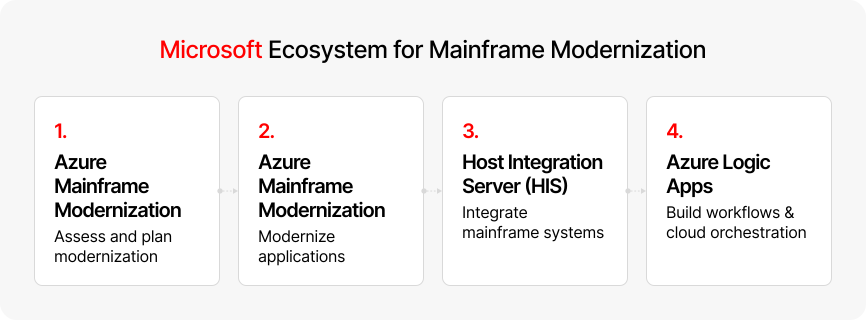
Host Integration Server (HIS)
Host Integration Server (HIS) enables communication between IBM mainframe systems and Microsoft environments.
The platform helps organizations integrate legacy applications with:
- Windows infrastructure
- .NET applications
- SQL Server
- Azure services
HIS is commonly used in enterprises that need to preserve existing transactional systems while modernizing surrounding applications and business workflows.
Azure Logic Apps
Azure Logic Apps is a workflow automation platform designed to simplify integration across enterprise systems.
Within modernization initiatives, Logic Apps helps organizations automate processes between legacy applications, APIs, databases, and cloud services.
This allows enterprises to create modern integration layers around existing mainframe environments without fully replacing core systems.
Azure Mainframe Modernization
Azure Mainframe Modernization Overview outlines Microsoft’s broader modernization strategy for enterprises moving toward hybrid and cloud-native architectures.
The platform ecosystem supports:
- Workload migration
- API integration
- Application modernization
- And hybrid operational models
Microsoft positions Azure modernization as a gradual transformation process that allows organizations to modernize at their own pace while preserving business continuity.
Mainframes сontinue to evolve alongside modern technologies
Perhaps one of the most important trends is that mainframes themselves continue to evolve.
Modern IBM Z systems now support:
- AI acceleration
- Advanced encryption
- API integration
- Hybrid cloud connectivity
- Automation frameworks
- And modern DevOps tooling
Because of this, modernization discussions today are less focused on whether the mainframe remains relevant and more focused on how organizations can integrate it effectively into modern enterprise architectures.
For many companies, the future is not purely cloud-based or purely mainframe-based. Instead, it is increasingly built around hybrid environments where legacy and modern systems operate together as part of a unified technology ecosystem.
Do you have a migration project ahead?
Talk to expert. Save your time


